Evaluating ICT integration models and their effects on learning competencies

Downloads
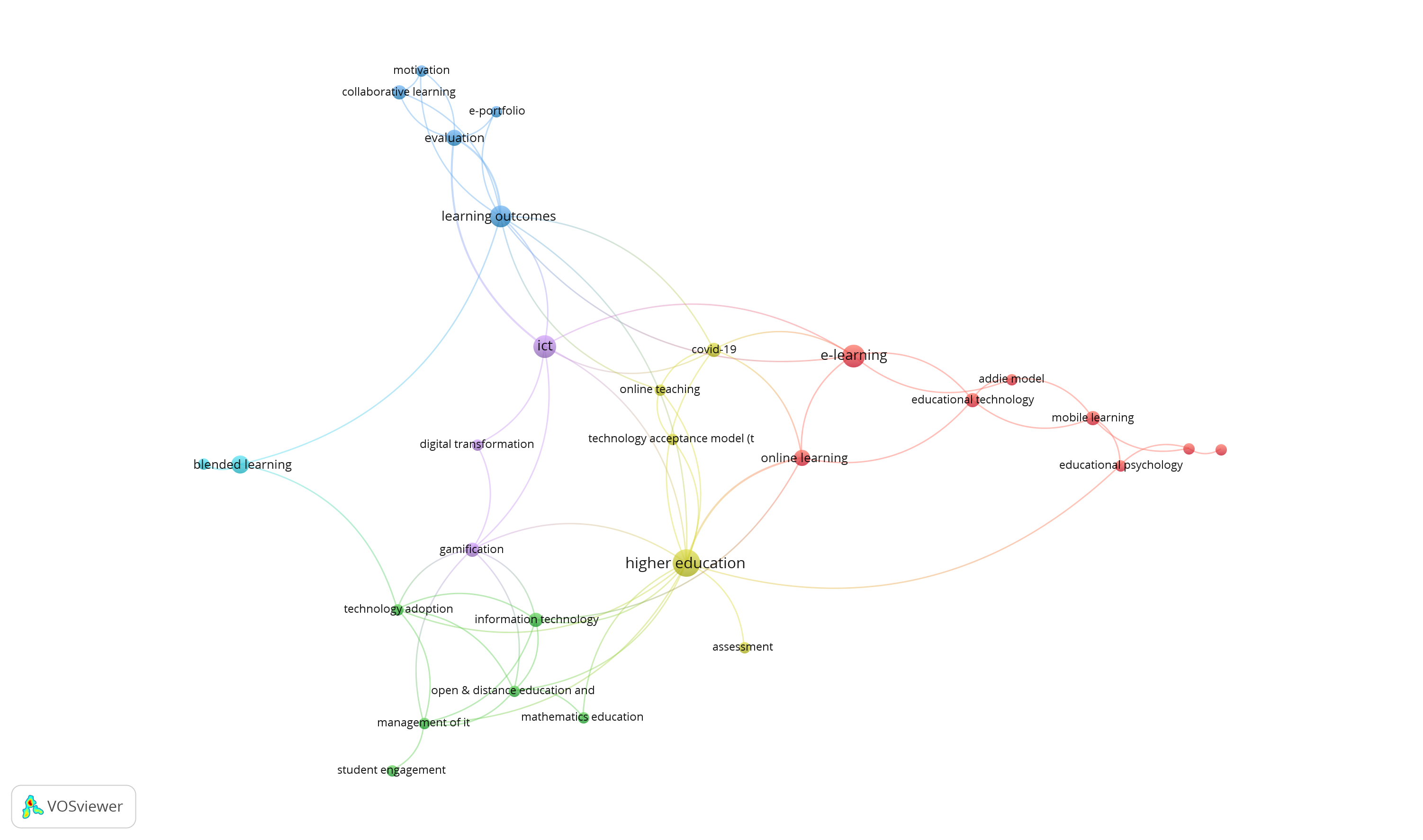
This systematic review evaluates models of Information and Communication Technology (ICT) integration in education and examines their effects on learning competencies. Following the Preferred Reporting Items for Systematic Reviews and Meta-Analyses (PRISMA) framework, the review searched Scopus for English-language, peer-reviewed journal articles published from 2014 through 2024. The search identified 117 records, which were used to map the broader research landscape through author-keyword co-occurrence analysis in VOSviewer. After screening and eligibility assessment, 19 studies were retained for systematic evidence synthesis. The bibliometric analysis identified prominent connections among higher education, ICT, e-learning, blended learning, technology adoption, assessment, and learning outcomes. The systematic synthesis showed that ICT-supported approaches can strengthen learner engagement, collaboration, digital competence, and, in some contexts, academic performance. However, the evidence was heterogeneous, and many reported outcomes were based on teacher, student, or administrator perceptions rather than direct competency measures. Positive effects were more consistently reported when ICT use was pedagogically aligned and supported by teacher competence, sustained professional development, reliable infrastructure, managerial commitment, and alignment with curricula and assessment. Frameworks such as Technological Pedagogical Content Knowledge, the Technology Acceptance Model, and instructional-design models help explain different aspects of adoption and implementation, but no single framework adequately captures the technological, pedagogical, and institutional conditions involved. The review concludes that effective ICT integration requires coordinated attention to instructional design, teacher readiness, learner needs, infrastructure, and organizational support. Future research should prioritize longitudinal, comparative, and competency-based evaluations across diverse educational settings.
Abella, J. L., & Rosa, E. D. D. (2023). Digital Literacy and Digital Competence of Selected Filipino Teachers: Basis for a Post-Pandemic Pedagogy. Ijorer International Journal of Recent Educational Research, 4(5), 548–569. https://doi.org/10.46245/ijorer.v4i5.378
Adzifome, N. S., & Agyei, D. D. (2023). Learning with mobile devices—Insights from a university setting in Ghana. Education and Information Technologies, 28(3), 3381–3399. https://doi.org/10.1007/s10639-022-11300-4
Agyei, D. D. (2022). Transferring and Sustaining Technological Innovations After Professional Development: Insights From School Leaders and Teachers in Sub-Saharan Africa. Journal of Applied Learning & Teaching, 5(Special Issue 2). https://doi.org/10.37074/jalt.2022.5.s2.4
Aidoo, B., Macdonald, A., Gyampoh, A. O., Baah, K. A., & Tsyawo, J. (2022). Factors Influencing Teachers’ Online Teaching Competence in Higher Education. Social Education Research, 148–160. https://doi.org/10.37256/ser.3120221315
Akram, H., Aslam, S., Saleem, A., & Parveen, K. (2021). The Challenges of Online Teaching in COVID-19 Pandemic: A Case Study of Public Universities in Karachi, Pakistan. Journal of Information Technology Education Research, 20, 263–282. https://doi.org/10.28945/4784
Ale, K., Loh, Y. A., & Chib, A. (2017). Contextualized-Olpc Education Project in Rural India: Measuring Learning Impact and Mediation of Computer Self-Efficacy. Educational Technology Research and Development, 65(3), 769–794. https://doi.org/10.1007/s11423-017-9517-2
Amin, S., Utaya, S., Bachri, S., Sumarmi, S., & Susilo, S. (2020). Effect of Problem Based Learning on Critical Thinking Skill and Enviromental Attitude. Journal for the Education of Gifted Young Scientists, 8(2), Article 2. https://doi.org/10.17478/jegys.650344
Analyti, E., Schoina, I., Travlou, C., Mitroyanni, E., Drongitis, A., & Kriparopoulou, A. (2024). Learning Object Repository Systems and Their Use in Greek Education. Technium Education and Humanities, 10, 28–40. https://doi.org/10.47577/teh.v10i.11910
Anlimachie, M. A., Avoada, C., & Amoako-Mensah, T. (2022). Leapfrogging Inequality Strategies for Transformed Rural Education: A School District Case, Ghana. Australian and International Journal of Rural Education, 33–51. https://doi.org/10.47381/aijre.v32i1.282
Aravantinos, S., Lavidas, K., Voulgari, I., Papadakis, S., Karalis, T., & Komis, V. (2024). Educational Approaches with AΙ in Primary School Settings: A Systematic Review of the Literature Available in Scopus. Education Sciences, 14(7), 744. https://doi.org/10.3390/educsci14070744
Arhin, J., Boateng, F. O., Akosah, E. F., & K. Nyako Gyimah Nyako Gyimah. (2024). Perceptions and Readiness of High School Mathematics Teachers for Integration of ICT Tools in the Teaching and Learning of Mathematics. Pedagogical Research, 9(1), em0179. https://doi.org/10.29333/pr/14032
Arlinwibowo, J., Retnawati, H., & Kartowagiran, B. (2022). The Impact of ICT Utilization to Improve the Learning Outcome: A Meta-Analysis. International Journal of Evaluation and Research in Education (Ijere), 11(2), 522. https://doi.org/10.11591/ijere.v11i2.22112
Asad, M. M., Aftab, K., Sherwani, F., Churi, P., Moreno-Guerrero, A.-J., & Pourshahian, B. (2021). Techno-Pedagogical Skills for 21st Century Digital Classrooms: An Extensive Literature Review. Education Research International, 2021, 1–12. https://doi.org/10.1155/2021/8160084
Badran, A., Eid, L., Abozaied, H., & Nagy, N. (2021). Egypt’s ICT Reform: Adoption Decisions and Perspectives of Secondary School Teachers During COVID-19. Aera Open, 7. https://doi.org/10.1177/23328584211042866
Balla, E. (2024). Increasing the Effectiveness of the Educational Process Through the Integration of Technology and the Use of Modern Methodologies in Humanities. Journal of Educational and Social Research, 14(6), 132. https://doi.org/10.36941/jesr-2024-0161
Barksdale, S., Upadhyay, B., & Vernon, M. (2021). Teacher Professional Development: Mobile and Limited Technology-Enhanced Pedagogy. International Journal of Technology in Education and Science, 5(4), 486–511. https://doi.org/10.46328/ijtes.249
Basil, P. T., & Ndijuye, L. G. (2019). Pre-Primary Teachers’ Preparedness in Integrating Information and Communication Technology in Teaching and Learning in Tanzania. Information and Learning Sciences, 121(1/2), 79–94. https://doi.org/10.1108/ils-01-2019-0009
Bisri, A., Putri, A., & Rosmansyah, Y. (2023). A Systematic Literature Review on Digital Transformation in Higher Education: Revealing Key Success Factors. International Journal of Emerging Technologies in Learning (Ijet), 18(14), 164–187. https://doi.org/10.3991/ijet.v18i14.40201
Bouchebcheb, L. (2023). Innover Pour Apprendre La Langue Étrangère: Traduire Le Numérique en Gestes Didactiques via Les Plateformes. Taduction Et Langues, 22(2), 308–322. https://doi.org/10.52919/translang.v22i2.963
Caffery, L. J., Catapan, S. d. C., Taylor, M., Kelly, J. T., Haydon, H. M., Smith, A. C., & Snoswell, C. L. (2024). Telephone Versus Video Consultations: A Systematic Review of Comparative Effectiveness Studies and Guidance for Choosing the Most Appropriate Modality. Journal of Telemedicine and Telecare, 31(7), 909–918. https://doi.org/10.1177/1357633x241232464
Carrió, M., Baños, J.-E., & Rodríguez, G. (2022). Comparison of the Effect of Two Hybrid Models of Problem-Based Learning Implementation on the Development of Transversal and Research Skills and the Learning Experience. Frontiers in Education, 7. https://doi.org/10.3389/feduc.2022.875860
Çelik, İ., Gedrimiene, E., Siklander, P., & Muukkonen, H. (2024). The Affordances of Artificial Intelligence-Based Tools for Supporting 21st-Century Skills: Australasian Journal of Educational Technology. https://doi.org/10.14742/ajet.9069
Chamba, L. T., & Chikusvura, N. (2024). Future-Proofing Quality Education Using Integrated Assessment Systems. Quality Education for All, 1(1), 240–255. https://doi.org/10.1108/qea-11-2023-0014
Changwong, K., Sukkamart, A., & Sisan, B. (2018). Critical thinking skill development: Analysis of a new learning management model for Thai high schools. Journal of International Studies, 11(2), 37–48. https://doi.org/10.14254/2071-8330.2018/11-2/3
Chen, M. (2023). Digital Education as a Tool for Achieving Education Equity: A Systematic Literature Review of the United Kingdom and China. The Educational Review Usa, 7(12), 1832–1843. https://doi.org/10.26855/er.2023.12.001
Chidakwa, N., & Khanare, F. P. (2024). The Fourth Industrial Revolution: Overcoming Digital Divides in Zimbabwean Rural Learning Ecologies. Futurity Education, 125–147. https://doi.org/10.57125/fed.2024.06.25.07
Christian, K. B., Kelly, A. M., & Bugallo, M. F. (2021). NGSS-based teacher professional development to implement engineering practices in STEM instruction. International Journal of STEM Education, 8(1). https://doi.org/10.1186/s40594-021-00284-1
Dai, W. (2023). An Empirical Study on English Preservice Teachers’ Digital Competence Regarding ICT Self-Efficacy, Collegial Collaboration and Infrastructural Support. Heliyon, 9(9), e19538. https://doi.org/10.1016/j.heliyon.2023.e19538
Dawadi, M. P. (2022). Community College Teachers’ Perceptions and Practices of ICT Integrated Teaching. Journal of Bhuwanishankar, 1(1), 1–22. https://doi.org/10.3126/jobs.v1i1.49490
De Jong, T. (2010). Cognitive load theory, educational research, and instructional design: Some food for thought. Instructional Science, 38(2), 105–134. https://doi.org/10.1007/s11251-009-9110-0
De Smet, C., Valcke, M., Schellens, T., De Wever, B., & Vanderlinde, R. (2016). A qualitative study on learning and teaching with learning paths in a learning management system. Journal of Social Science Education, 15(1), 27–37. https://doi.org/10.4119/UNIBI/jsse-v15-i1-1460
Dewi, N. R., Listiaji, P., Akhlis, I., Kurniawan, I. O., Siswanto, S., & Widyaningrum, R. A. (2023). Project-based Laboratory Rotation Blended Learning Model to Train Students’ Critical Thinking and Collaboration in Physics Course. E3S Web of Conferences, 400, 01023. https://doi.org/10.1051/e3sconf/202340001023
Divayana, D. G. H., Suyasa, P. W. A., & Widiartini, N. K. (2021). An innovative model as evaluation model for information technology-based learning at ICT vocational schools. Heliyon, 7(2). https://doi.org/10.1016/j.heliyon.2021.e06347
Doğan, Ö. K. (2023). Trends and Issues in Science Education in the New Millennium: A Bibliometric Analysis of the JRST. Science Insights Education Frontiers, 16(1), 2375–2407. https://doi.org/10.15354/sief.23.or249
Dogra, P., & Parrey, A. H. (2022). Work From Home Amid Black Swan Event (Covid-19): A bibliometric Analysis From A social Science Perspective. Kybernetes, 53(3), 1015–1038. https://doi.org/10.1108/k-09-2022-1348
Dotson, M. E., Alvarez, V., Tackett, M., Asturias, G., Leon, I., & Ramanujam, N. (2020). Design Thinking-Based STEM Learning: Preliminary Results on Achieving Scale and Sustainability Through the IGNITE Model. Frontiers in Education, 5. https://doi.org/10.3389/feduc.2020.00014
Duan, R., & Guo, L. (2021). Application of Blockchain for Internet of Things: A Bibliometric Analysis. Mathematical Problems in Engineering, 2021, 1–16. https://doi.org/10.1155/2021/5547530
El‐Hamamsy, L., Monnier, E.-C., Avry, S., Chevalier, M., Bruno, B., Zufferey, J. D., & Mondada, F. (2023). Modelling the Sustainability of a Primary School Digital Education Curricular Reform and Professional Development Program. Education and Information Technologies, 29(3), 2857–2904. https://doi.org/10.1007/s10639-023-11653-4
Esteve-Mon, F. M., Cela-Ranilla, J. M., & Gisbert-Cervera, M. (2016). ETeach3D. Journal of Educational Computing Research, 54(6), 816–839. https://doi.org/10.1177/0735633116637191
Falloon, G. (2020). From digital literacy to digital competence: The teacher digital competency (TDC) framework. Educational Technology Research and Development, 68(5), 2449–2472. https://doi.org/10.1007/s11423-020-09767-4
Fikriyatii, A., Agustini, R., & Sutoyo, S. (2022). Critical Thinking Cycle Model to Promote Critical Thinking Disposition and Critical Thinking Skills of Pre-Service Science Teacher. Cypriot Journal of Educational Sciences, 17(1), 130–143. https://doi.org/10.18844/cjes.v17i1.6690
Gicheru, W., & Mwangi, N. (2023). Identifying the Need to Institutionalize Digital Equity Among Faculty: The Experience of the Kenya Medical Training College. Frontiers in Education, 8. https://doi.org/10.3389/feduc.2023.1252842
Glassner, A., & Back, S. (2020). Connectivism: Networks, Knowledge, and Learning. In A. Glassner & S. Back, Exploring Heutagogy in Higher Education (pp. 39–47). Springer Singapore. https://doi.org/10.1007/978-981-15-4144-5_3
González, Y. A. C., & Muñoz-Repiso, A. G.-V. (2017). Development of computational thinking skills and collaborative learning in initial education students through educational activities supported by ICT resources and programmable educational robots. In Dodero J.M., E. S. de I. University of Cadiz Department of Informatics Engineering,. 11510 Puerto Real, Cadiz, Ibarra Saiz M.S., F. de C. de la E. University of Cadiz Evaluation in Formative Contexts (EVALfor) Research Group, 11510 Puerto Real, Cadiz, Ruiz Rube I., & E. S. de I. University of Cadiz Department of Informatics Engineering, 11510 Puerto Real, Cadiz (Eds.), ACM Int. Conf. Proc. Ser.: Vol. Part F132203. Association for Computing Machinery. https://doi.org/10.1145/3144826.3145450
Hakimi, M., Shahidzay, A. K., Fazi, A. W., & Qarizada, A. (2024). Empirical Assessment of ICT Impact on Teaching and Learning in High Schools: A Study in the Context of Balkh, Afghanistan. Eiki Journal of Effective Teaching Methods, 2(1). https://doi.org/10.59652/jetm.v2i1.96
Halabieh, H., Hawkins, S., Bernstein, A. E., Lewkowict, S., Unaldi Kamel, B., Fleming, L., & Levitin, D. (2022). The Future of Higher Education: Identifying Current Educational Problems and Proposed Solutions. Education Sciences, 12(12). https://doi.org/10.3390/educsci12120888
Higgins, K., Huscroft-D’Angelo, J., & Crawford, L. (2019). Effects of Technology in Mathematics on Achievement, Motivation, and Attitude: A Meta-Analysis. Journal of Educational Computing Research, 57(2), 283–319. https://doi.org/10.1177/0735633117748416
Higgins, M. (2019). Board Games as Play-Full Pedagogical Pivots for STEM Teaching and Learning. Journal of the Canadian Association for Curriculum Studies, 17(1), 90–110. https://doi.org/10.25071/1916-4467.40426
Hsu, H.-Y., Wang, S.-K., & Coster, D. (2017). New literacy implementation: The impact of professional development on middle school student science learning. International Journal of Information and Communication Technology Education, 13(3), 53–72. https://doi.org/10.4018/IJICTE.2017070105
Hu, L. (2023). Programming and 21st Century Skill Development in K‐12 Schools: A Multidimensional Meta‐analysis. Journal of Computer Assisted Learning, 40(2), 610–636. https://doi.org/10.1111/jcal.12904
Hurtado‐Mazeyra, A., Núñez-Pacheco, R., Barreda-Parra, A., Guillén-Chávez, E.-P., & Turpo-Gebera, O. (2022). Digital Competencies of Peruvian Teachers in Basic Education. Frontiers in Education, 7. https://doi.org/10.3389/feduc.2022.1058653
Islam, R., & Lum, H. C. (2024). Empowering Teachers as Users in Human-Centered Design. Proceedings of the Human Factors and Ergonomics Society Annual Meeting, 68(1), 1454–1458. https://doi.org/10.1177/10711813241272117
Issa, R., & Jaaron, A. A. M. (2017). Measuring e-learning readiness: The case of Palestinian public secondary schools. International Journal of Technology Enhanced Learning, 9(4), 319–338. https://doi.org/10.1504/IJTEL.2017.087792
Jammeh, A. L. J., Karegeya, C., & Ladage, S. (2024). Application of technological pedagogical content knowledge in smart classrooms: Views and its effect on students’ performance in chemistry. Education and Information Technologies, 29(8), 9189–9219. https://doi.org/10.1007/s10639-023-12158-w
Jang, J., Ko, Y., Shin, W. S., & Han, I. (2021). Augmented Reality and Virtual Reality for Learning: An Examination Using an Extended Technology Acceptance Model. Ieee Access, 9, 6798–6809. https://doi.org/10.1109/access.2020.3048708
Joshi, D. R., Adhikari, K. P., Khanal, J., Belbase, S., & Khanal, B. (2023). Developing and integrating digital resources in online mathematics instruction and assessment during Covid-19. Cogent Education, 10(2). https://doi.org/10.1080/2331186X.2023.2230394
Kharki, K. E., Berrada, K., & Burgos, D. (2021). Design and Implementation of a Virtual Laboratory for Physics Subjects in Moroccan Universities. Sustainability, 13(7), 3711. https://doi.org/10.3390/su13073711
Khlaif, Z. N., & Farid, S. (2018). Transforming learning for the smart learning paradigm: Lessons learned from the Palestinian initiative. Smart Learning Environments, 5(1). https://doi.org/10.1186/s40561-018-0059-9
Kumar, S. (2024). The Effects of Information and Communication Technology (ICT) on Pedagogy and Student Learning Outcome in Higher Education. EAI Endorsed Transactions on Scalable Information Systems, 11(2), 1–5. https://doi.org/10.4108/eetsis.4629
Kwangmuang, P., Jarutkamolpong, S., Sangboonraung, W., & Daungtod, S. (2021). The development of learning innovation to enhance higher order thinking skills for students in Thailand junior high schools. Heliyon, 7(6). https://doi.org/10.1016/j.heliyon.2021.e07309
Lamb, D. (2015). Learning about events through involvement and participation: The use of experiential and authentic learning experiences. International Journal of Event and Festival Management, 6(1), 73–91. https://doi.org/10.1108/IJEFM-12-2013-0043
Lavidas, K., Voulgari, I., Papadakis, S., Athanassopoulos, S., Anastasiou, A., Filippidi, A., Komis, V., & Karacapilidis, N. (2024). Determinants of Humanities and Social Sciences Students’ Intentions to Use Artificial Intelligence Applications for Academic Purposes. Information, 15(6), 314. https://doi.org/10.3390/info15060314
Laumer, S. (2023). ICT-based Training and Education in Volunteer Sports Communities: An Action Design Research Project With Soccer Referees During The COVID-19 Pandemic. Internet Research, 34(2), 586–609. https://doi.org/10.1108/intr-10-2021-0714
Lawrence, J. E., & Tar, U. A. (2018). Factors that influence teachers’ adoption and integration of ICT in teaching/learning process. Educational Media International, 55(1), 79–105. https://doi.org/10.1080/09523987.2018.1439712
Lazo, Y., Crawford, B., Cisternas-Caneo, F., Barrera-García, J., Soto, R., & Giachetti, G. (2025). Evolution and Trends of the Exploration–Exploitation Balance in Bio-Inspired Optimization Algorithms: A Bibliometric Analysis of Metaheuristics. Biomimetics, 10(8), 517. https://doi.org/10.3390/biomimetics10080517
Liang, M., Lim, C. P., Park, J., & Mendoza, N. B. (2022). A Review of ICT-enabled Learning for Schoolgirls in Asia and Its Impacts on Education Equity. Educational Technology Research and Development, 71(2), 267–293. https://doi.org/10.1007/s11423-022-10178-w
Liu, J. (2021). Bridging Digital Divide Amidst Educational Change for Socially Inclusive Learning During the COVID-19 Pandemic. Sage Open, 11(4). https://doi.org/10.1177/21582440211060810
Liu, Y., Zhao, L., & Su, Y.-S. (2022). The Impact of Teacher Competence in Online Teaching on Perceived Online Learning Outcomes during the COVID-19 Outbreak: A Moderated-Mediation Model of Teacher Resilience and Age. International Journal of Environmental Research and Public Health, 19(10). https://doi.org/10.3390/ijerph19106282
Mapisa, B. Z., & Makena, B. (2024). The Impact of ICT Adoption in Enhancing Teaching and Learning in Primary Schools of Amathole East District, Eastern Cape. Research in Social Sciences and Technology, 9(1), 213–231. https://doi.org/10.46303/ressat.2024.12
Maryani, I., Prasetyo, Z. K., Wilujeng, I., & Purwanti, S. (2022). Promoting higher-order thinking skills during online learning: The integration of metacognition in science for higher education. International Journal of Evaluation and Research in Education, 11(4), 1980–1988. https://doi.org/10.11591/ijere.v11i4.23129
Mater, N. R., Haj Hussein, M. J., Salha, S. H., Draidi, F. R., Shaqour, A. Z., Qatanani, N., & Affouneh, S. (2022). The effect of the integration of STEM on critical thinking and technology acceptance model. Educational Studies, 48(5), 642–658. https://doi.org/10.1080/03055698.2020.1793736
McDonagh, A., Camilleri, P., Engen, B. K., & McGarr, O. (2021). Introducing the PEAT Model to Frame Professional Digital Competence in Teacher Education. Nordic Journal of Comparative and International Education (Njcie), 5(4), 5–17. https://doi.org/10.7577/njcie.4226
Mohebi, L. (2021). Theoretical Models of Integration of Interactive Learning Technologies Into Teaching: A Systematic Literature Review. International Journal of Learning Teaching and Educational Research, 20(12), 232–254. https://doi.org/10.26803/ijlter.20.12.14
Moosa, S., & Ramnarain, U. (2023). The Impact of an Empowerment Evaluation Professional Development Program on Physical Sciences Teachers’ Attitudes, Beliefs and Behavioral Intentions to Integrate ICT Into Their Science Lessons. Frontiers in Education, 8. https://doi.org/10.3389/feduc.2023.1159373
Msiza, G. M., Malatji, K. S., & Mphahlele, L. K. (2020). Implementation of an e-learning project in Tshwane south district: Towards a paperless classroom in South African secondary schools. Electronic Journal of E-Learning, 18(4), 300–310. https://doi.org/10.34190/EJEL.20.18.4.003
Muñoz, J. A. H., & Valencia, D. C. (2023). Trends and Challenges of Digital Divide and Digital Inclusion: A Bibliometric Analysis. Journal of Information Science, 51(4), 813–830. https://doi.org/10.1177/01655515221148366
Nair, R. S., & Chuan, T. C. (2021). Integrating Technology That Uses Modified SAMR Model as a Pedagogical Framework in Evaluating Learning Performance of Undergraduates. The Educational Review Usa, 5(10), 373–384. https://doi.org/10.26855/er.2021.10.001
Natarajan, U., Lim, K. Y. T., & Laxman, K. (2021). A National Vision for Information and Communication Technologies in Education: Reflections on Singapore’s ICT Technologies Masterplans. International Journal of Educational Management, 35(5), 943–954. https://doi.org/10.1108/ijem-11-2020-0532
Nguyen, H., Mouw, J. M., Mali, A., Strijbos, J.-W., & Korpershoek, H. (2024). Developing a Technological Pedagogical and Content Knowledge (TPACK) survey for university teachers. Computers and Education Open, 7, 100202. https://doi.org/10.1016/j.caeo.2024.100202
Nong, L., Liao, C., Ye, J.-H., Wei, C., Zhao, C., & Nong, W. (2022). The STEAM learning performance and sustainable inquiry behavior of college students in China. Frontiers in Psychology, 13. https://doi.org/10.3389/fpsyg.2022.975515
Norman, H., Adnan, N. H., Nordin, N., Ally, M., & Tsınakos, A. (2022). The Educational Digital Divide for Vulnerable Students in the Pandemic: Towards the New Agenda 2030. Sustainability, 14(16), 10332. https://doi.org/10.3390/su141610332
Oliveira, G., Grenha Teixeira, J., Torres, A., & Morais, C. (2021). An exploratory study on the emergency remote education experience of higher education students and teachers during the COVID-19 pandemic. British Journal of Educational Technology, 52(4), 1357–1376. https://doi.org/10.1111/bjet.13112
Oliwa, R. (2022). Relationship between student satisfaction with online learning and intelligence types. Journal of Interactive Learning Research, 33(3), 143–161.
Orooji, F., & Taghiyareh, F. (2018). Peer Assessment and Self-Assessment in Social Learning Environments Through a New Crowd-Sourced Mechanism. IEEE Access, 6, 7321–7339. https://doi.org/10.1109/ACCESS.2018.2792059
Otieno, P. (2023). The Use of Information and Communication Technology in English Foreign Language Learning. International Journal of Linguistics, 4(1), 51–62. https://doi.org/10.47604/ijl.1858
Özgüç, C. S., & Cavkaytar, A. (2016). Developing technology supported instructional activities in a class of middle school students with intellectual disability. Egitim ve Bilim, 41(188), 197–226. https://doi.org/10.15390/EB.2016.6691
Paas, F., & Van Merriënboer, J. J. G. (2020). Cognitive-Load Theory: Methods to Manage Working Memory Load in the Learning of Complex Tasks. Current Directions in Psychological Science, 29(4), 394–398. https://doi.org/10.1177/0963721420922183
Pang, S., Nhor, R., & Em, S. (2022). Cambodian Teachers’ Readiness of Using Ict: The Case of Rural Upper-Secondary Schools. Jurnal As-Salam, 6(2), 145–162. https://doi.org/10.37249/assalam.v6i2.432
Pavez, I., Novoa-Echaurren, Á., & Salinas-Layana, A. (2024). Teachers’ Situated Knowledge: Addressing Digital Exclusion in Rural Contexts. Digital Education Review, (45), 171–178. https://doi.org/10.1344/der.2024.45.171-178
Pečiuliauskienė, P., Kaminskienè, L., & Lehtinen, E. (2023). Science Teachers’ Collaborative Innovative Activities: The Role of Professional Development and Professional Experience. Humanities and Social Sciences Communications, 10(1). https://doi.org/10.1057/s41599-023-01833-5
Pilten, P., Pilten, G., & Sahinkaya, N. (2017). The Effect of ICT Assisted Project Based Learning Approach on Prospective ICT Integration Skills of Teacher Candidates. Journal of Education and Training Studies, 5(3), 135. https://doi.org/10.11114/jets.v5i3.2051
Plageras, A., Xenakis, A., & Kalovrektis, Κ. (2023). An Application Study of the UTAUT Methodology for the Flipped Classroom Model Adoption by Applied Sciences and Technology Teachers. International Journal of Emerging Technologies in Learning (Ijet), 18(02), 190–202. https://doi.org/10.3991/ijet.v18i02.35585
Prayogi, S. (2023). Evaluation of STEM students’ critical thinking in terms of cognitive style through problem-based distance learning. Journal of Education and E-Learning Research, 10(3), 557–568. https://doi.org/10.20448/jeelr.v10i3.4972
Prayogi, S., Ahzan, S., & Rokhmat, J. (2022). Opportunities to Stimulate the Critical Thinking Performance of Preservice Science Teachers Through the Ethno-Inquiry Model in an E-Learning Platform. International Journal of Learning, Teaching and Educational Research, 21(9), 134–153. https://doi.org/10.26803/ijlter.21.9.8
Procopio, M. (2024). Neuroscience-Based Information and Communication Technologies Development in Elementary School Mathematics Through Games: A Case Study Evaluation. Education Sciences, 14(3), 213. https://doi.org/10.3390/educsci14030213
Rahmadi, I. F. (2021). Teachers’ Technology Integration and Distance Learning Adoption Amidst the Covid-19 Crisis: A Reflection for the Optimistic Future. Turkish Online Journal of Distance Education, 26–41. https://doi.org/10.17718/tojde.906472
Rahman, S. F. A., Yunus, M. M., & Hashim, H. (2021). Applying UTAUT in Predicting ESL Lecturers Intention to Use Flipped Learning. Sustainability, 13(15), 8571. https://doi.org/10.3390/su13158571
Rasheed, A. A., Ahmad, A., & Azam, S. M. F. (2024). Contextual Factors and Virtual Professional Learning Communities in Maldivian Schools. International Journal of Educational Management, 38(2), 486–508. https://doi.org/10.1108/ijem-12-2022-0492
Rawal, D. (2024). Mapping of School Teachers’ Digital Competency in the Context of Digital Infrastructure: A Systematic Review and Empirical Study of India. Journal of Professional Capital and Community, 9(3), 173–195. https://doi.org/10.1108/jpcc-01-2024-0016
Razak, N. A., Rasli, R. M., Subhan, S., Ahmad, N. A., & Malik, S. (2023). Systematic Review on Digital Transformation Among Teachers in Public Schools. International Journal of Evaluation and Research in Education (Ijere), 12(2), 1059. https://doi.org/10.11591/ijere.v12i2.24498
Redhana, I. W., Sudria, I. B. N., & Suardana, I. N. (2024). A Digital Instructional Book: A Tool for Improving Students’ Learning Outcomes on the Reduction and Oxidation Reactions. Science Education International, 35(1), 61–70. https://doi.org/10.33828/sei.v35.i1.7
Roemintoyo, R., Miyono, N., Murniati, N. A. N., & Budiarto, M. K. (2022). Optimising the utilisation of computer-based technology through interactive multimedia for entrepreneurship learning. Cypriot Journal of Educational Sciences, 17(1), 105–119. https://doi.org/10.18844/cjes.v17i1.6686
Rosidin, U., Kadaritna, N., & Hasnunidah, N. (2019). Can argument-driven inquiry models have impact on critical thinking skills for students with differentpersonality types? Cakrawala Pendidikan, 38(3), 511–526. https://doi.org/10.21831/cp.v38i3.24725
Rossi, I. V., de Lima, J. D., Sabatke, B., Nunes, M. A. F., Ramirez, G. E., & Ramirez, M. I. (2021). Active learning tools improve the learning outcomes, scientific attitude, and critical thinking in higher education: Experiences in an online course during the COVID-19 pandemic. Biochemistry and Molecular Biology Education, 49(6), 888–903. https://doi.org/10.1002/bmb.21574
Rozan, A. D., Syahri, B., Prasetya, F., Fortuna, A., Samala, A. D., & Rawas, S. (2024). The Impact of Project-Based Learning on 21st Century Skill Development of Vocational Engineering Students: A Systematic Literature Review. Journal of Engineering Researcher and Lecturer, 3(3), 189–212. https://doi.org/10.58712/jerel.v3i3.168
Sackstein, S., Matthee, M., & Weilbach, L. (2022). Theories and Models Employed to Understand the Use of Technology in Education: A Hermeneutic Literature Review. Education and Information Technologies, 28(5), 5041–5081. https://doi.org/10.1007/s10639-022-11345-5
Saeed, B. A., & Ramdane, T. (2022). The effect of implementation of a creative thinking model on the development of creative thinking skills in high school students: A systematic review. Review of Education, 10(3). https://doi.org/10.1002/rev3.3379
Sahlin, J., Tsertsidis, A., & Islam, M. S. (2016). Usages and Impacts of the Integration of Information and Communication Technologies (ICTs) in Elementary Classrooms: Case Study of Swedish Municipality Schools. Interactive Learning Environments, 25(5), 561–579. https://doi.org/10.1080/10494820.2016.1170045
Salimi, F. (2025). Aligning Policy and Practice: The World Bank’s Approach to EdTech in Sub-Saharan Africa. Policy Futures in Education, 23(6), 1134–1156. https://doi.org/10.1177/14782103251324275
Sánchez, M. R. F., María del Carmen Garrido Arroyo, & Porras-Masero, I. (2022). Curricular Integration of Digital Technologies in Teaching Processes. Frontiers in Education, 7. https://doi.org/10.3389/feduc.2022.1005499
Sangkawetai, C., Neanchaleay, J., Koul, R., & Murphy, E. (2020). Predictors of K-12 Teachers’ Instructional Strategies with ICTs. Technology, Knowledge and Learning, 25(1), 149–177. https://doi.org/10.1007/s10758-018-9373-0
Sautière, P.-É., Blervacq, A.-S., & Vizioli, J. (2019). Production and Uses of E-Learning Tools for Animal Biology Education at University. The European Zoological Journal, 86(1), 63–78. https://doi.org/10.1080/24750263.2019.1582722
Schuijff, M., & Dijkstra, A. M. (2020). Practices of Responsible Research and Innovation: A Review. Science and Engineering Ethics, 26(2), 533–574. https://doi.org/10.1007/s11948-019-00167-3
Selim, H. M., & Chiravuri, A. (2015). Identification of factors affecting university instructors’ adoption of hybrid e-learning. International Journal of Innovation and Learning, 17(4), 486–515. https://doi.org/10.1504/IJIL.2015.069633
Salemink, K., Strijker, D., & Bosworth, G. (2017). Rural development in the digital age: A systematic literature review on unequal ICT availability, adoption, and use in rural areas. Journal of Rural Studies, 54, 360–371. https://doi.org/10.1016/j.jrurstud.2015.09.001
Setuju, Widowati, A., Mariah, S., Suyitno, & Setiadi, B. R. (2023). Project-based blended learning: The innovation of the pandemic era of learning models in vocational high schools. AIP Conference Proceedings, 2671(1), 050021. https://doi.org/10.1063/5.0114791
Shamir‐Inbal, T., & Blau, I. (2021). Characteristics of Pedagogical Change in Integrating Digital Collaborative Learning and Their Sustainability in a School Culture: e‐CSAMR Framework. Journal of Computer Assisted Learning, 37(3), 825–838. https://doi.org/10.1111/jcal.12526
Shekaoneka, L., & Arthur, W. K. (2024). Challenges to Effective ICT Implementation in Primary Education Development Projects in Tanzania: A Case Study of Songea District. NGJSD, 14(2), 266–281. https://doi.org/10.4314/ngjsd.v14i2.19
Sivadanam, S., Teiko-Awere, E., Tumin, D., Haberstroh, A., Reis, H., & Akpan, U. S. (2024). Scholarly Impact of Quality Improvement Reports in Neonatology. American Journal of Perinatology, 42(01), 090–099. https://doi.org/10.1055/s-0044-1787544
Smiley, T. (2023). Unravelling EFL Teachers’ Mastery of TPACK: Technological Pedagogical and Content Knowledge in Writing Classes. Heliyon, 9(6), e17348. https://doi.org/10.1016/j.heliyon.2023.e17348
Suciati, R., Gofur, A., Susilo, H., & Lestari, U. (2022). Development of Textbook Integrated of Metacognition, Critical Thinking, Islamic Values, and Character. Pegem Egitim ve Ogretim Dergisi, 12(4), 20–28. https://doi.org/10.47750/pegegog.12.04.03
Suwardika, G., Sopandi, A. T., Indrawan, I. P. O., & Masakazu, K. (2024). A flipped classroom with whiteboard animation and modules to enhance students’ self-regulation, critical thinking and communication skills: A conceptual framework and its implementation. Asian Association of Open Universities Journal, 19(2), 135–152. https://doi.org/10.1108/AAOUJ-10-2023-0115
Szyszka, M., Tomczyk, Ł., & Kochanowicz, A. M. (2022). Digitalisation of Schools From the Perspective of Teachers’ Opinions and Experiences: The Frequency of ICT Use in Education, Attitudes Towards New Media, and Support From Management. Sustainability, 14(14), 8339. https://doi.org/10.3390/su14148339
Teoh, S. C., Ch’ng, C. K., & Zaibidi, N. Z. (2022). Analysis of ICT Implementation in Teaching and Learning using Analytic Hierarchy Process (AHP): A Comparison of Rural and Urban Areas in Kedah. Cultural Management: Science and Education, 6(1), 55–69. https://doi.org/10.30819/cmse.6-1.04
Thapa, A. B. (2022). Technology Integration for Quality Education: A Study for Equity and Justice. Bodhi an Interdisciplinary Journal, 71–88. https://doi.org/10.3126/bodhi.v8i1.46456
Thongsri, N., Shen, L., & Bao, Y. (2019). Investigating factors affecting learner’s perception toward online learning: Evidence from ClassStart application in Thailand. Behaviour & Information Technology, 38(12), 1243–1258. https://doi.org/10.1080/0144929X.2019.1581259
Thongsri, N., Shen, L., Bao, Y., & Alharbi, I. M. (2018). Integrating UTAUT and UGT to explain behavioural intention to use M-learning: A developing country’s perspective. Journal of Systems and Information Technology, 20(3), 278–297. https://doi.org/10.1108/JSIT-11-2017-0107
Timotheou, S., Miliou, O., Dimitriadis, Y., Sobrino, S. V., Giannoutsou, N., Cachia, R., Monés, A. M., & Ioannou, A. (2023). Impacts of digital technologies on education and factors influencing schools’ digital capacity and transformation: A literature review. Education and Information Technologies, 28(6), 6695–6726. https://doi.org/10.1007/s10639-022-11431-8
Tirol, S., Cortes, S., Tinapay, A. O., & Samillano, J. (2022). A Teacher Training Program on Designing Participatory Educational Action Research Proposal. Ho Chi Minh City Open University Journal of Science - Social Sciences, 12(1), 23–39. https://doi.org/10.46223/hcmcoujs.soci.en.12.1.2214.2022
Tondeur, J., Petko, D., Christensen, R., Drossel, K., Starkey, L., Knezek, G., & Schmidt-Crawford, D. A. (2021). Quality Criteria for Conceptual Technology Integration Models in Education: Bridging Research and Practice. Educational Technology Research and Development, 69(4), 2187–2208. https://doi.org/10.1007/s11423-020-09911-0
Turrado-Sevilla, M. A., Mayo, I. C., & Lucía, A. (2020). Characterising innovative primary schools and their teachers in Spain. International Journal of Learning and Change, 12(3), 248–264. https://doi.org/10.1504/IJLC.2020.108371
Urooj, S., & Farooq, M. S. (2023). Impact of Students’ Ubiquitous Learning Through Web 2.0 Tool on Students’ 21st Century Skills: Critical Thinking and Collaboration. Sir Syed Journal of Education & Social Research (Sjesr), 6(3), 29–43. https://doi.org/10.36902/sjesr-vol6-iss3-2023(29-43)
Uslu, Ö. (2017). Evaluating the professional development program aimed technology integration at the era of curriculum change. Kuram ve Uygulamada Egitim Bilimleri, 17(6), 2031–2055. https://doi.org/10.12738/estp.2017.6.0116
Venkatesh, V., Thong, Y. L. T., & Xu, X. (2012). Consumer Acceptance and Use of Information Technology: Extending the Unified Theory of Acceptance and Use of Technology. MIS Quarterly, 36(1), 157. https://doi.org/10.2307/41410412
Wahyuni, D. S., Agustini, K., & Ariadi, G. (2022). An AHP-Based Evaluation Method for Vocational Teacher‘s Competency Standard. International Journal of Information and Education Technology, 12(2), 157–164. https://doi.org/10.18178/ijiet.2022.12.2.1599
Webb, L., Clough, J., O’Reilly, D., Wilmott, D., & Witham, G. (2017). The utility and impact of information communication technology (ICT) for pre-registration nurse education: A narrative synthesis systematic review. Nurse Education Today, 48, 160–171. https://doi.org/10.1016/j.nedt.2016.10.007
Weng, C.-H., & Tang, Y. (2014). The relationship between technology leadership strategies and effectiveness of school administration: An empirical study. Computers and Education, 76, 91–107. https://doi.org/10.1016/j.compedu.2014.03.010
Wen, Y., Wu, L., He, S., Ng, N. H.-E., Teo, B. C., Looi, C. K., & Cai, Y. (2023). Integrating augmented reality into inquiry-based learning approach in primary science classrooms. Educational Technology Research and Development, 71(4), 1631–1651. https://doi.org/10.1007/s11423-023-10235-y
Wiyono, B. B., Samsudin, S., Imron, A., & Arifin, I. (2022). The Effectiveness of Utilizing Information and Communication Technology in Instructional Supervision With Collegial Discussion Techniques for the Teacher’s Instructional Process and the Student’s Learning Outcomes. Sustainability, 14(9), 4865. https://doi.org/10.3390/su14094865
Wollny, K., Cui, S., McNeil, D., Benzies, K., Parsons, S., Sajobi, T. T., & Metcalfe, A. (2022). Quality Improvement Interventions to Prevent Unplanned Extubations in Pediatric Critical Care: A Systematic Review. Systematic Reviews, 11(1). https://doi.org/10.1186/s13643-022-02119-8
Wu, B., Hu, Y., Gu, X., & Lim, C. P. (2016). Professional Development of New Higher Education Teachers with Information and Communication Technology in Shanghai. Journal of Educational Computing Research, 54(4), 531–562. https://doi.org/10.1177/0735633115621922
Xu, J., & Phongsatha, S. (2024). Determinants of Physical Teachers’ Attitude Toward Technology Integration in Shenzhen Schools, China. International Journal of Sociologies and Anthropologies Science Reviews, 4(2), 93–108. https://doi.org/10.60027/ijsasr.2024.3541
Yuliandari, T. M., Putri, A., & Rosmansyah, Y. (2023). Digital Transformation in Secondary Schools: A Systematic Literature Review. Ieee Access, 11, 90459–90476. https://doi.org/10.1109/access.2023.3306603
Yulianti, D. (2024). Development of a science, environment, technology, and society-based learning module to foster critical thinking in elementary students. Journal of Education and Learning, 18(4), 1372–1384. https://doi.org/10.11591/edulearn.v18i4.21713
Zajda, J. (2021). Constructivist Learning Theory and Creating Effective Learning Environments. In J. Zajda, Globalisation and Education Reforms (Vol. 25, pp. 35–50). Springer International Publishing. https://doi.org/10.1007/978-3-030-71575-5_3
Zeng, W. (2022). An Empirical Research on China’s Policy for ICT Integration in Basic Education From 1988 to 2021. Educational Technology Research and Development, 70(3), 1059–1082. https://doi.org/10.1007/s11423-022-10079-y
Zhang, J., Wang, J., Zang, H., Ma, N., Skitmore, M., Qu, Z., Skulmoski, G. J., & Chen, J. (2024). The Application of Machine Learning and Deep Learning in Intelligent Transportation: A Scientometric Analysis and Qualitative Review of Research Trends. Sustainability, 16(14), 5879. https://doi.org/10.3390/su16145879
Zhang, S., Ma, X., Huifen, X., & Lu, J. (2024). The Influence of Mentorship in Workplace on Teachers’ Professional Development a Meta-Analysis Based on 66 Experiments. Journal of Managerial Psychology, 39(6), 815–831. https://doi.org/10.1108/jmp-11-2022-0588
Zlatkin-Troitschanskaia, O., & Schlax, J. (2020). Entry Assessment of Student Learning Preconditions in Higher Education: Implications for the Transition from Secondary to Tertiary Education in Germany. European Review, 28(S1), S67–S84. https://doi.org/10.1017/S1062798720000915
Copyright (c) 2026 Binar Kurnia Prahani, Hanandita Veda Saphira

This work is licensed under a Creative Commons Attribution-ShareAlike 4.0 International License.
Authors who publish with Review Journal of Higher-Order Thinking and Metacognition agree to the following terms:
- For all articles published in Review Journal of Higher-Order Thinking and Metacognition, copyright is retained by the authors. The authors grant the publisher permission to announce the work under specific conditions. When the manuscript is accepted for publication, the authors agree to implement a non-exclusive transfer of publishing rights to the journals.
- Authors retain copyright and grant the journal right of first publication with the work simultaneously licensed under a Creative Commons Attribution-ShareAlike 4.0 International License that allows others to share the work with an acknowledgment of the work's authorship and initial publication in this journal.
- Authors are able to enter into separate, additional contractual arrangements for the non-exclusive distribution of the journal's published version of the work (e.g., post it to an institutional repository or publish it in a book), with an acknowledgment of its initial publication in this journal.
- Authors are permitted and encouraged to post their work online (e.g., in institutional repositories or on their website) prior to and during the submission process, as it can lead to productive exchanges, as well as earlier and greater citation of published work (See The Effect of Open Access).

This work is licensed under a Creative Commons Attribution-ShareAlike 4.0 International License.